

Key takeaways
- RCS delivers richer content with images and buttons, but SMS reaches all devices universally.
- Use SMS for transactional messages where delivery is the only goal, not format.
- Use RCS for promotions and abandonment recovery where visual product references drive conversions.
- Always test SMS fallback logic before scaling RCS to prevent silent delivery gaps.
RCS delivers richer experiences than SMS, but SMS reaches more devices today. The right answer depends on your subscriber base, the geography you operate in, and what the message needs to do. Neither channel wins outright across every scenario, and the choice is rarely permanent.
What actually separates RCS from SMS
SMS has been the default for transactional and promotional mobile messaging for decades. It travels over the cellular network, arrives on every handset regardless of operating system, and requires no app installation. The format is plain text, capped at 160 characters per segment, with no native image support and no click tracking beyond a shortened URL.
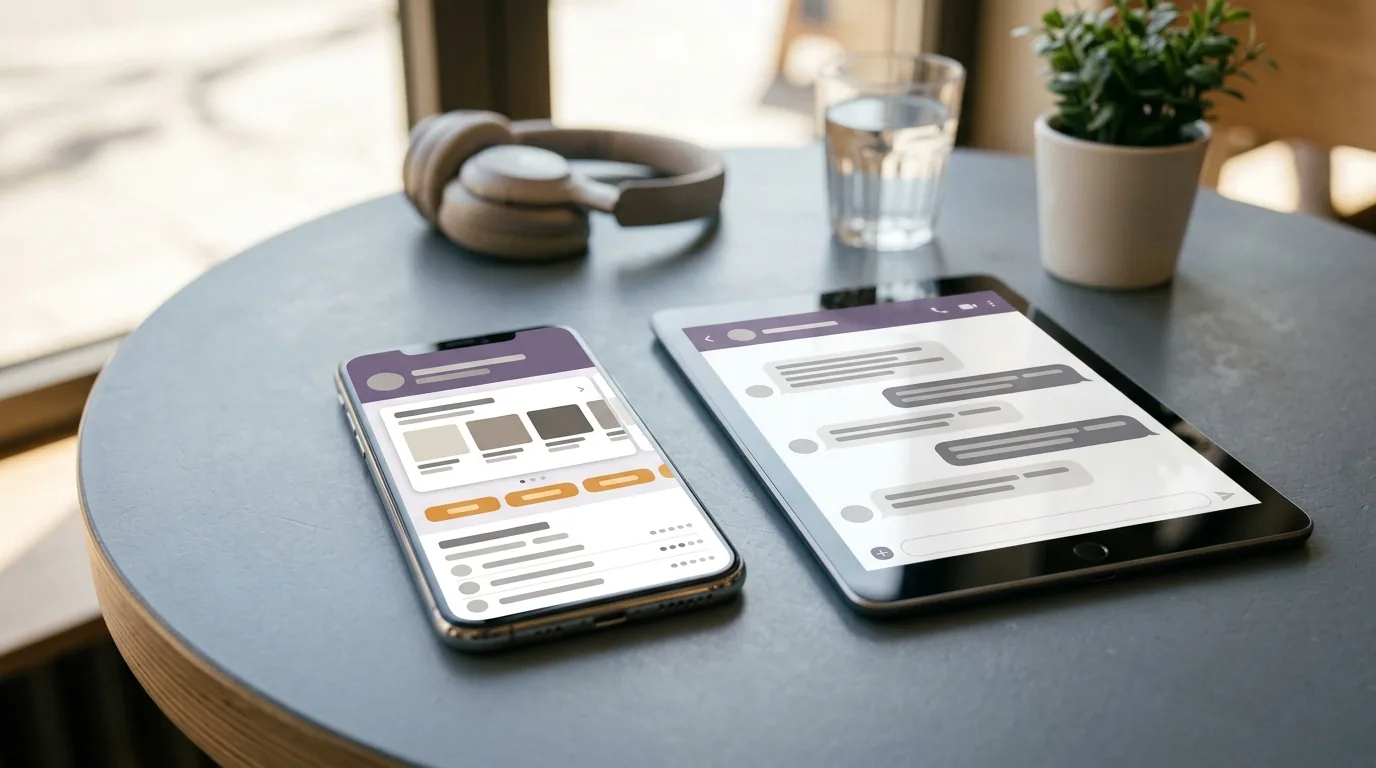
RCS (Rich Communication Services) is the protocol that replaces SMS within the native messaging app on supported Android and, since iOS 18, Apple devices (GSMA, 2024). It carries branded sender IDs, images, carousels, reply buttons and verified business profiles. Critically, it also returns read receipts and delivery confirmations at a granular level, which transforms how you measure a campaign.
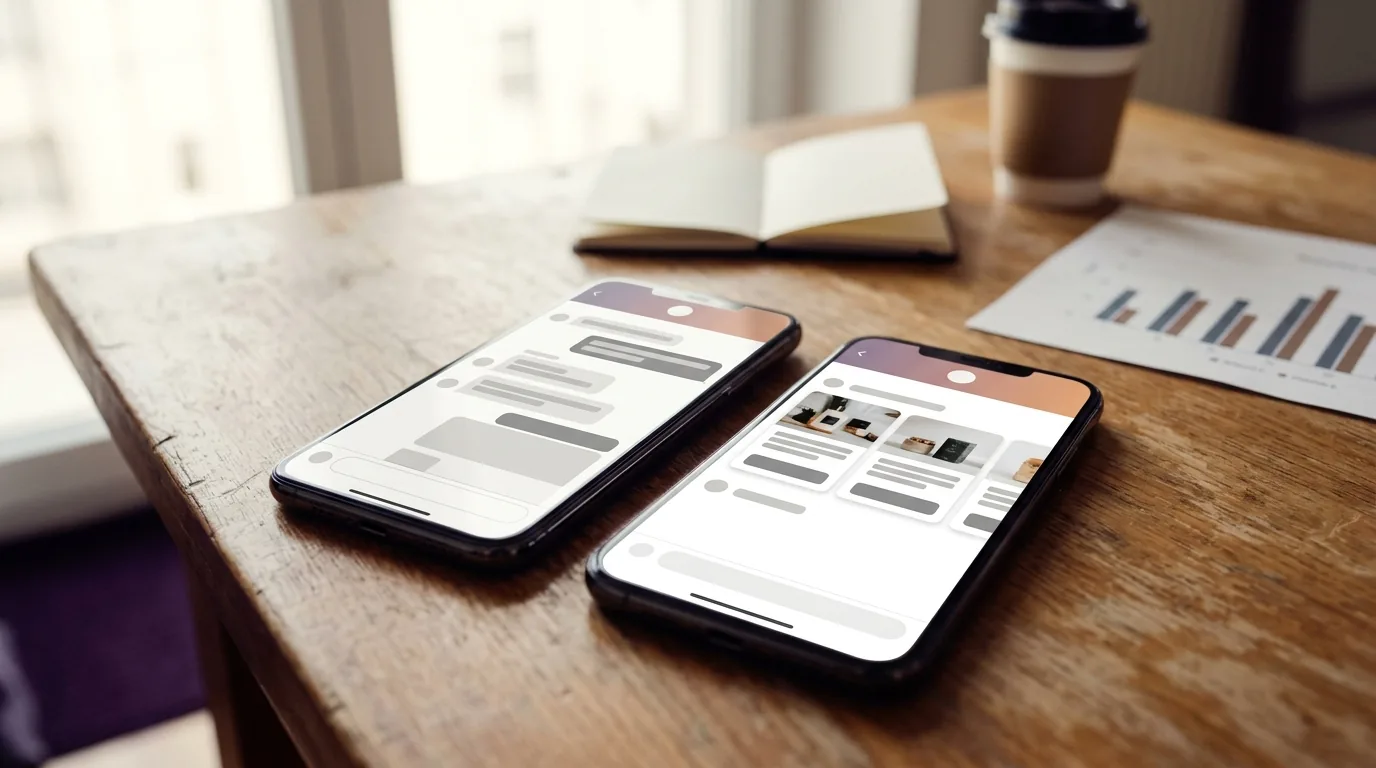
The functional gap is significant. A browse abandonment message sent via RCS can display the exact product the visitor viewed, a stock availability check result, and a single-tap return-to-basket button, all inside the message thread. The same trigger sent via SMS contains a line of text and a link the recipient has to remember to tap.
Reach and device penetration by market
This is where the decision gets more complicated, and where teams working across multiple European markets often hit a tooling gap rather than a strategy gap.
RCS reach is not uniform. Android penetration in markets such as Germany, Spain and the Netherlands sits well above 70% (Statcounter GlobalStats, January 2025), which makes RCS viable as a primary channel. In the UK, Android holds roughly 55% of active smartphones (Statcounter GlobalStats, January 2025). iOS adoption above 45% means a meaningful share of your subscriber list will fall back to SMS unless your platform handles that fallback automatically.
The GSMA reported in late 2024 that RCS had reached over one billion monthly active users globally, a figure that has accelerated since Apple's iOS 18 rollout (GSMA, 2024). But monthly active users is not the same as your opted-in subscriber base being RCS-capable. Device age, carrier support and regional roll-out timelines all affect the real match rate you will see on any given send.
A practical starting point is to audit your subscriber list by device type before committing to a channel split. If you cannot do that within your current stack, that is worth surfacing as a data architecture issue rather than a reason to default entirely to SMS.
Cost, deliverability and send cadence
SMS pricing is per-segment, per-destination country. International sends, particularly to markets in North America or the Middle East, carry substantially higher per-message costs than domestic UK or EU sends. RCS pricing models vary by provider but are generally per-conversation or per-session rather than per segment, which changes the economics at scale.
| Dimension | SMS | RCS |
|---|---|---|
| Reach | Universal (all handsets) | Android-first; iOS from iOS 18 onwards |
| Media support | Text only (160 chars per segment) | Images, carousels, buttons, branded sender |
| Deliverability signal | Delivered/failed only | Delivered, read, button tapped |
| Fallback required | No | Yes, for non-RCS devices |
| Typical cost model | Per segment, per country | Per conversation or session |
| Personalisation token support | Text variables only | Text, image URL, deep link, button label |
Deliverability rate is more stable with SMS because there are no capability mismatches to handle. With RCS, a misconfigured fallback logic will silently drop messages for the portion of your list that is not RCS-capable. That is a governance gap, not a channel flaw, but it is worth auditing before your next peak period.
Send cadence and re-entry cooldown periods matter equally for both channels. A subscriber who receives an urgency message about a low-stock item, then immediately receives a promo code layering message from a separate campaign trigger, will disengage regardless of how rich the format is. Suppression logic needs to operate at the subscriber level, not at the campaign level, and it needs to fire across both channels simultaneously if you are running them in parallel.
Matching the channel to the campaign goal
The channel question is really a use-case question. Some scenarios resolve clearly.
Transactional messages, order confirmations, shipping updates, return authorisations, perform well on SMS because delivery is the only requirement. The recipient does not need to interact, and universal reach matters more than rich format. Adding RCS to these flows adds cost and complexity without material uplift in customer experience.
Promotional and re-engagement campaigns are where the format gap between RCS and SMS shows up in conversion. A multi-touch sequence recovering a basket abandonment benefits from the ability to display the abandoned items visually, carry a personalisation token for the recipient's name and the product name, and include a single-tap deep link back to the basket. Multichannel remarketing that surfaces the same product across on-site and mobile channels depends on that level of message fidelity to close the loop.
Browse abandonment versus basket abandonment also shapes the decision. A browse abandonment trigger fires earlier in the funnel, when purchase intent is still forming. A plain SMS with a URL asks the recipient to do more cognitive work to reconnect with the product. RCS with a product image and a "view again" button reduces that friction considerably. For basket abandonment, where intent is higher and the recovery window is shorter, either channel can perform, but the read-receipt data from RCS lets you refine trigger timing more precisely.
For a more detailed look at how these two channels compare on revenue outcomes specifically, the article on RCS messaging versus SMS in ecommerce marketing covers attribution and campaign measurement in depth.
Geography adds another layer. If you are running a seasonal campaign across the UK, France and Germany simultaneously, your optimal channel split will differ by market because device penetration differs. A single-channel approach will either underserve Android-heavy markets by defaulting to plain SMS, or create delivery gaps in iOS-heavy segments if RCS is sent without a tested fallback. The only workable answer is a platform that resolves the channel at send time against the known device profile of each subscriber.
- Use SMS as the primary channel for transactional flows, markets with low RCS penetration, and any segment where device data is incomplete.
- Use RCS for promotional campaigns, browse and basket abandonment recovery, and any message where a visual product reference will materially change the click-through rate.
- Always configure a tested SMS fallback for RCS sends, with suppression logic that prevents a subscriber receiving both versions of the same message.
- Align cooldown periods and suppression rules across channels at the subscriber level, particularly during peak trading when multiple campaigns may trigger concurrently.
What good measurement looks like
SMS measurement is binary at the channel level: delivered or not, clicked or not. You can infer open behaviour from click data, but you cannot distinguish between a message that was read and ignored and one that was never seen. That limits how you refine trigger timing or test subject line variants at the message level.
RCS changes the measurement layer. Read receipts confirm when a message was seen, which means you can separate non-delivery from non-engagement. A campaign that shows high delivery and high read rates but low tap rates has a message or offer problem. The same metrics on SMS require you to triangulate from downstream conversion data, which adds lag and reduces precision.
Mobile-first template design also interacts with measurement differently on each channel. An SMS with a long URL that wraps across two lines on an older handset will suppress clicks without any signal in your delivery data. An RCS message with a malformed button deep link will show a tap event but produce a broken journey. Both are template problems, but only one is visible in the channel's native reporting.
The most useful thing you can do before scaling either channel is to run a controlled send on a defined subscriber segment, measure at each stage of the funnel (delivered, read, tapped, converted), and set a re-entry cooldown period that reflects your actual purchase cycle rather than a default platform setting. That is not a complex exercise. It is a calibration that most teams skip because their tools make it harder than it should be.
How SaleCycle connects mobile messaging to on-site behaviour
The channel decision only pays off when the message is built on a complete picture of what each visitor did on site. SaleCycle's Activation Suite resolves the channel, the message content and the trigger timing from a single live visitor profile, so an RCS browse abandonment message carries the exact product, the correct stock status and the right suppression logic without manual campaign configuration. The same profile drives the SMS fallback if the device is not RCS-capable, and the on-site recovery experience if the visitor returns directly. That is the gap that disconnected point tools leave open, and it is where most of the recoverable revenue sits. The expert team is with you every step of the way, from integration through to seasonal campaign readiness.
Book a demo to see how your own subscriber data maps to the RCS versus SMS decision, and how the Activation Suite resolves the channel automatically at send time.